“Quality over quantity” is easy to say and hard to do, because quality doesn’t announce itself. Price is a hint, not a promise — plenty of expensive clothes are made badly, and a few cheap ones are made well. Here’s what to actually look at.
1. Fabric first
Read the label before you look at the price. Natural fibres — cotton, wool, linen, silk — generally wear better and age better than polyester blends. A little elastane is fine in jeans; 60% polyester in a “wool” coat is not.
Then feel it. Good fabric has weight. Hold a t-shirt up to the light: if you can see through it, you’ll see through it more after ten washes.
2. Seams
Turn it inside out. Stitches should be small, straight and dense — around 8 to 12 per inch. Loose threads, wobbly lines or a seam that pulls when you tug gently mean it was made fast.
Look at the seam allowance too. Generous fabric inside the seam means the piece can be altered. Tiny allowances mean it was cut to the bone.
3. Buttons and zips
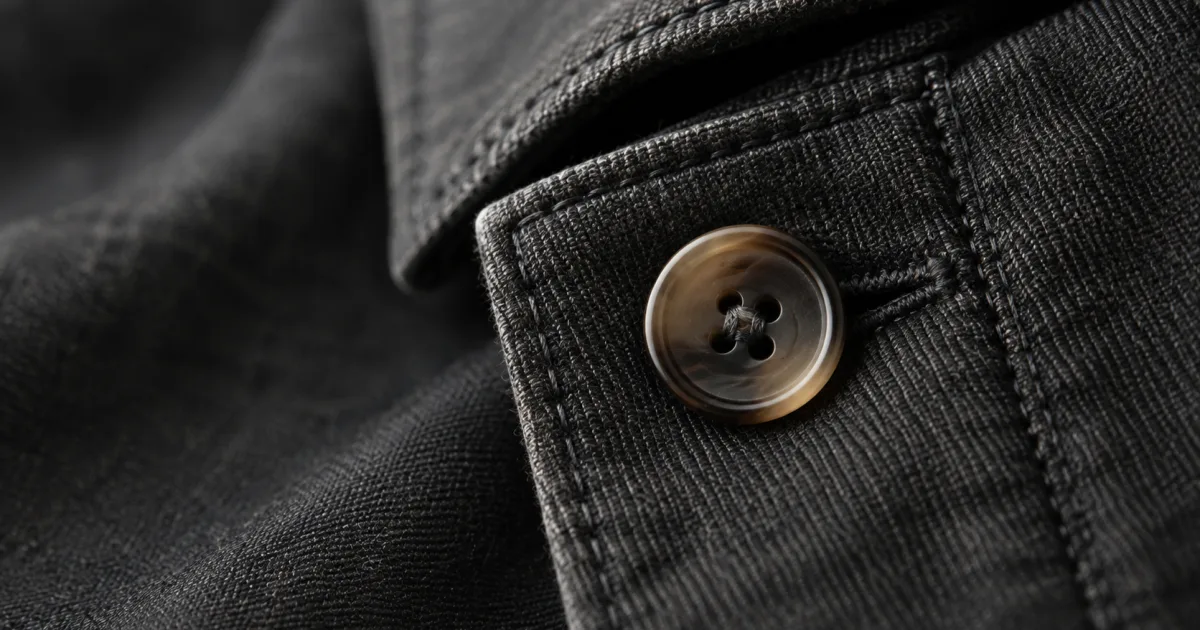
Cheap plastic buttons crack; horn, metal or corozo don’t. Buttons should be sewn with a shank (a little stem of thread) so they sit properly when done up. Zips should run smoothly with one hand — YKK is a good sign.
4. Pattern matching
On checks and stripes, do the lines meet at the seams? Matching a pattern uses more fabric and more care. Brands that bother with it usually bother with everything else.
5. Lining and finishing
Jackets and coats: is the lining attached neatly, and does the hem hang flat? Trousers: are the inside edges finished (overlocked or bound) or left raw? Finishing is invisible from the outside and it’s exactly where corners get cut.
6. Fit — the one people skip
The best-made garment in the world won’t get worn if it pulls across the shoulders. Fit is quality. If you’d need to alter it in two places, it isn’t the right piece, however good the fabric.
Then let the numbers decide
Checking construction tells you whether something can last. Only wearing it tells you whether it does. Track each piece’s cost per wear and after a year you’ll know which brands really deliver — in your wardrobe, not in their marketing.
That’s the real definition of quality: the things you’re still wearing.